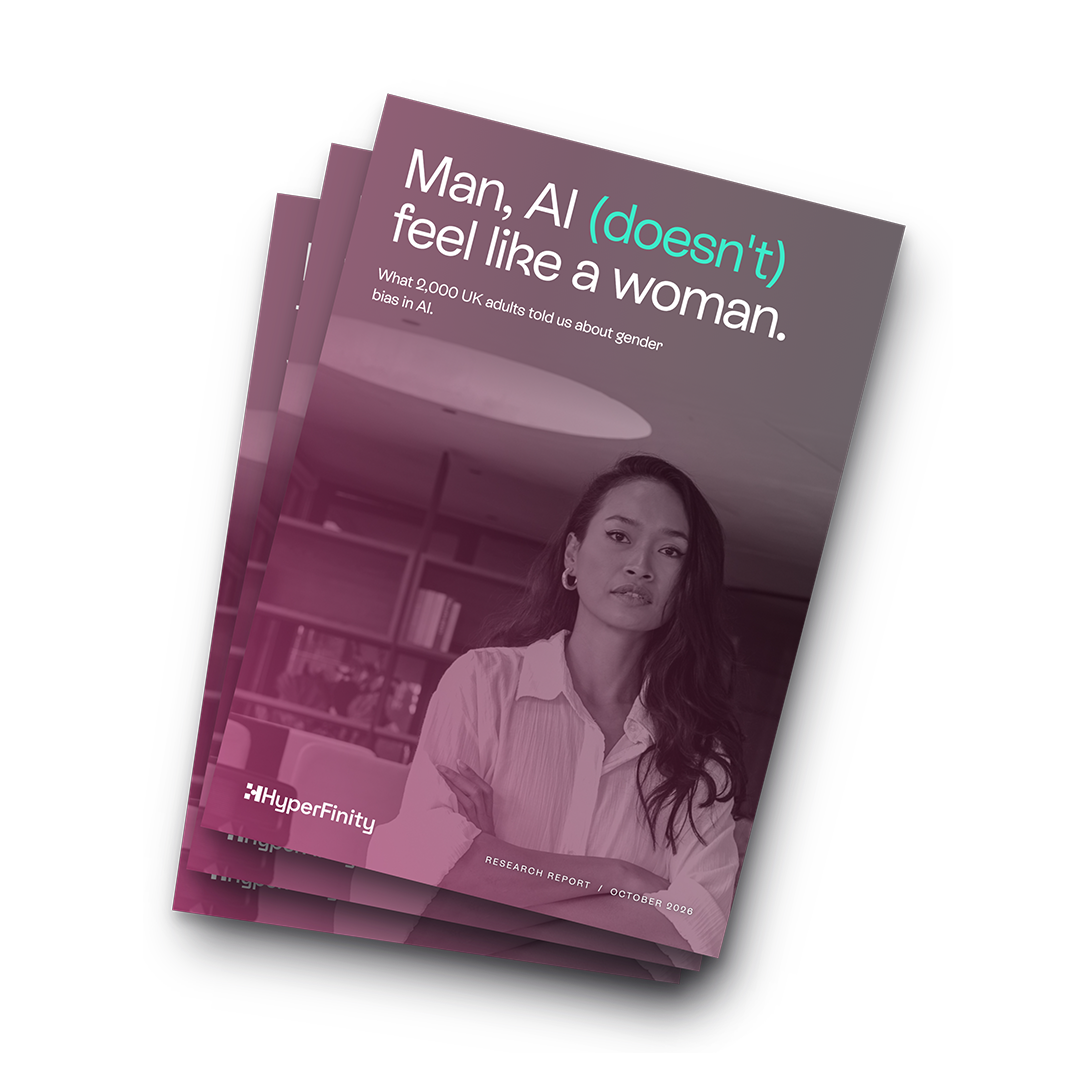
1. Get the research
Man, AI (doesn’t) feel like a woman.
We asked 2,000 UK adults how they use AI, what they believe about it, and what they’ve actually experienced.
The report shows the gap between belief and experience, and what that means for anyone building, buying or using AI.

2. See the gap
The gap is the finding.
Belief, recognition and personal experience don’t line up. Here’s the gap, stacked up.
50.7
%
believe gender bias exists in AI.
33.3
%
have felt misunderstood, overlooked or stereotyped by AI.
8.8
%
have a personal experience of being stereotyped by AI.
3. Know why it matters
Nobody talks about the version they didn’t get.
We’re increasingly using AI at work and at home – asking it what to do about our health, our careers and our money.
AI learns from historical data. It’s on us to look closer at what it’s carrying forward.

Everything you need to know about the report.
Who was surveyed?
We surveyed a national representative sample of 2,000 adults from across the UK.
We asked them 10 questions around how they use AI, how they perceive it, and what they’ve actually experienced. We also asked them who should be responsible for AI.
Who is the report for?
Anyone who builds, buys or uses AI and wants to understand how bias can go unnoticed in the tools we rely on every day.
What's the headline finding?
Half the UK believes gender bias exists in AI, but fewer than 1 in 10 have felt stereotyped by it.
Where was the research first presented?
At Leeds Digital Festival on Wednesday 30th September by HyperFinity’s Head of Analytics Jessie Stuart and Trinity McQueen’s Director and Head of Brand Research Laura Morris.